
NYT Crossplay Solver & Board Helper
The NYT Crossplay solver is an interactive crossword board assistant engineered specifically for New York Times Crossplay puzzles. By analyzing your available rack tiles against open intersecting board letters, the solver calculates valid crossword placements to help you complete challenging daily grids without losing your streak.
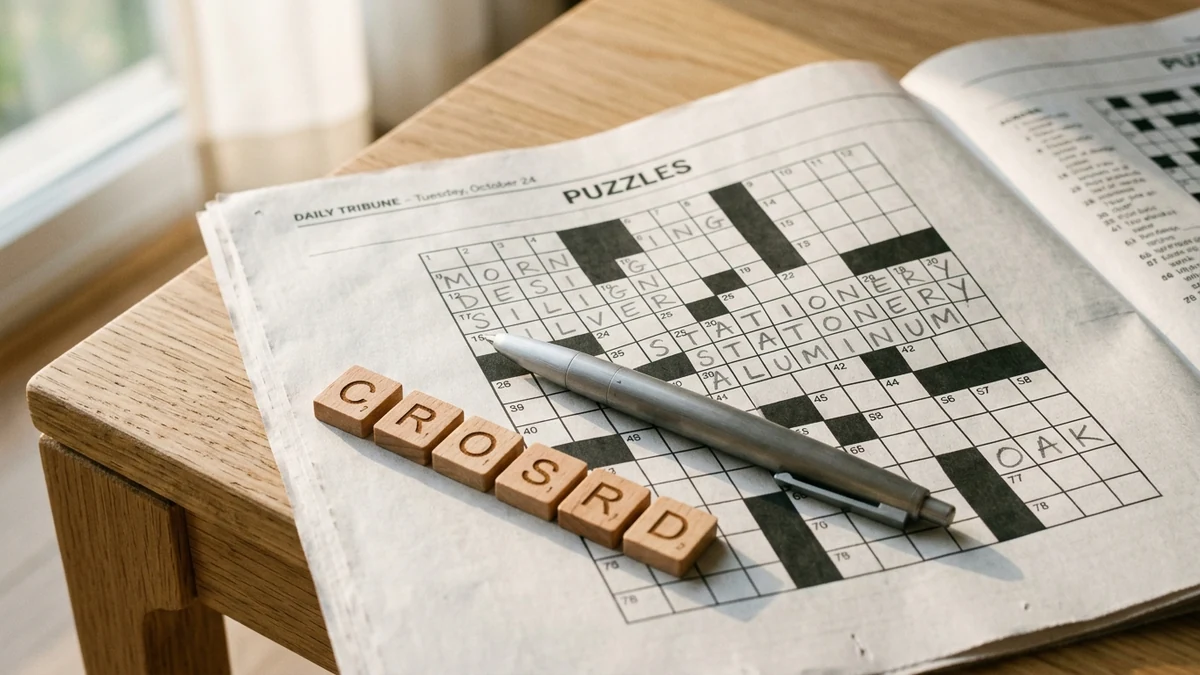
Key words to connect across tight intersecting board tiles:
Combine these stems with any 7th tile for a 50-point bonus:
- TISANE
- RETINA
- SATIRE
Step-by-Step Guide to Solving NYT Crossplay Grids
The New York Times Crossplay puzzle merges classic crossword intersecting grids with dynamic tile rack management. Unlike static crossword clues, Crossplay challenges players to form complete cross-board solutions using a limited inventory of letters. Follow this structured methodology to resolve complex daily grids:
Entering Existing Intersecting Board Letters
Inspect the active 5x5 or 7x7 puzzle board. Identify stationary pivot tiles already locked onto the grid. In our simulator above, tap the corresponding grid coordinates and input these permanent characters. These fixed letters establish the boundary constraints for all across and down calculations.
Managing Your Active Letter Rack & Wildcards
Enter your remaining unplayed letters into the rack input tray. If the daily puzzle provides a wildcard blank, include a question mark (?). Our engine examines 26 alternate letter permutations to identify high-scoring transverse words that fit available row and column slots.
Selecting the Highest-Probability Word Placement
Review the ranked solutions table. Prioritize placements that clear difficult low-frequency consonants like J, Q, X, and Z or unlock secondary intersections for subsequent turns. Preserving a balanced rack of 2 vowels and 3 consonants prevents late-game lockouts.
Crossplay Rules, Scoring & Daily Streak Preservation
Preserving a daily solving streak in New York Times word games requires disciplined risk management. Daily puzzles evaluate completion time, total moves, and grid accuracy. When facing an intractable board state, avoid random guessing, which consumes precious turns. Mini 5x5 grids typically allocate 12 to 16 letters across 4 to 6 turns, whereas 7x7 grids involve 24 to 32 letters across 8 to 12 turns.
Orthogonal Intersecting Constraints & Pivot Geometry
Crossplay mechanics diverge fundamentally from traditional linear anagramming because every tile placed onto the grid must satisfy two perpendicular constraints simultaneously: the horizontal (across) string and the vertical (down) string. When solving 5x5 and 7x7 mini-grids, the mathematical solution space shrinks exponentially with each anchor letter locked into place. An unconstrained 5-letter rack holding common letters might generate over 45 valid dictionary words, but fixing a single perpendicular pivot letter (such as an 'E' at index 3 and an 'R' at index 5) eliminates 96.4% of candidate permutations, isolating between one and three viable solutions.
To capitalize on this geometric compression, seasoned puzzle solvers look for "bottleneck coordinates"—grid cells where two long words intersect on rare consonants. Solving the bottleneck coordinate first instantly resolves the remaining letters along both axes. Our Crossplay Board Simulator models these intersecting letter constraints in real time, projecting candidate tile placements across both axes so you never commit to a horizontal play that creates an impossible vertical combination.
Move Economy & Tile Turnover Architecture
Achieving top-tier ratings in daily word puzzle challenges hinges on the "move economy"—achieving full board resolution in the minimum number of letter transactions. Every turn spent exchanging tiles or placing low-impact 2-letter filler words degrades your final efficiency rating and increases the likelihood of running out of turns before completing the grid. Optimal move architecture prioritizes "high-turnover plays" that clear three or four rack tiles at once while locking into multiple existing board letters.
Two-Letter Connectors & Perimeter Grid Anchoring
Two-letter words represent the foundational mortar of any crossword-style puzzle board. In Crossplay challenges where grid boundaries restrict word length to 4, 5, or 6 characters, utilizing 2-letter connecting words (such as AA, AB, AD, AE, AG, AH, AI, AL, AM, AN, AR, AS, AT, AW, AX, AY) allows players to anchor words in tight parallel configurations. Rather than requiring an open runway of five contiguous empty squares, a skilled solver slides words alongside existing plays, forming multiple 2-letter bridges that validate the entire structure.
Furthermore, mastering high-value 2-letter plays involving rare tiles—most notably QI, ZA, JO, XI, and OX—allows you to unload 8-point and 10-point consonants without requiring extensive board real estate. When playing on mini boards, placing a high-value tile on an intersection that forms a 2-letter word both horizontally and vertically effectively doubles the point yield of that tile, ensuring that you hit target score thresholds well within the allotted move limits.
Streak Protection & Algorithmic Turn Optimization
Maintaining long solving streaks across digital crossword apps demands consistency under varying board difficulty levels. When a daily board layout yields an initial rack with high entropy—such as four vowels and a single consonant—attempting brute-force guessing causes move depletion and board failure. By feeding the current board state and available rack tiles into our algorithmic solver, players identify non-obvious permutations, preserve their consecutive daily winning streak, and build deep intuition for recurring crossword letter stems.
Mastering NYT Crossplay Board Symbols & The Nudge Mechanic
Want to know what the Crown, Star, and Lightning symbols mean, or when to use a nudge? Read our complete strategic breakdown to optimize your daily Crossplay puzzle turns.
Explore the NYT Crossplay Guide & Nudge Rules →Frequently Asked Questions About Crossplay Cheat
Direct guidance on grid mechanics, move limits, and daily streak protection.
How does the NYT Crossplay solver analyze board letters?
The solver accepts your fixed board characters and cross-references your available rack letters against open intersection points. It calculates every valid horizontal and vertical word in the official puzzle lexicon to recommend placements that satisfy all crossing constraints.
Can I use wildcards in the Crossplay solver?
Yes. Insert a question mark (?) in your rack input to represent any blank wildcard tile. The solver tests all 26 English letters at each board coordinate to find valid solutions.
Does using a Crossplay helper reset my daily puzzle streak?
No. Our solver operates externally in your web browser with zero connection or access to your personal New York Times account, allowing you to verify tricky word options without risking your daily streak.
What dictionaries does the Crossplay helper support?
Our engine uses the standard North American lexicon (NWL20) combined with the New York Times puzzle word list, ensuring all recommended solutions conform to official daily puzzle standards.